
Every system your business runs on, finally working as one
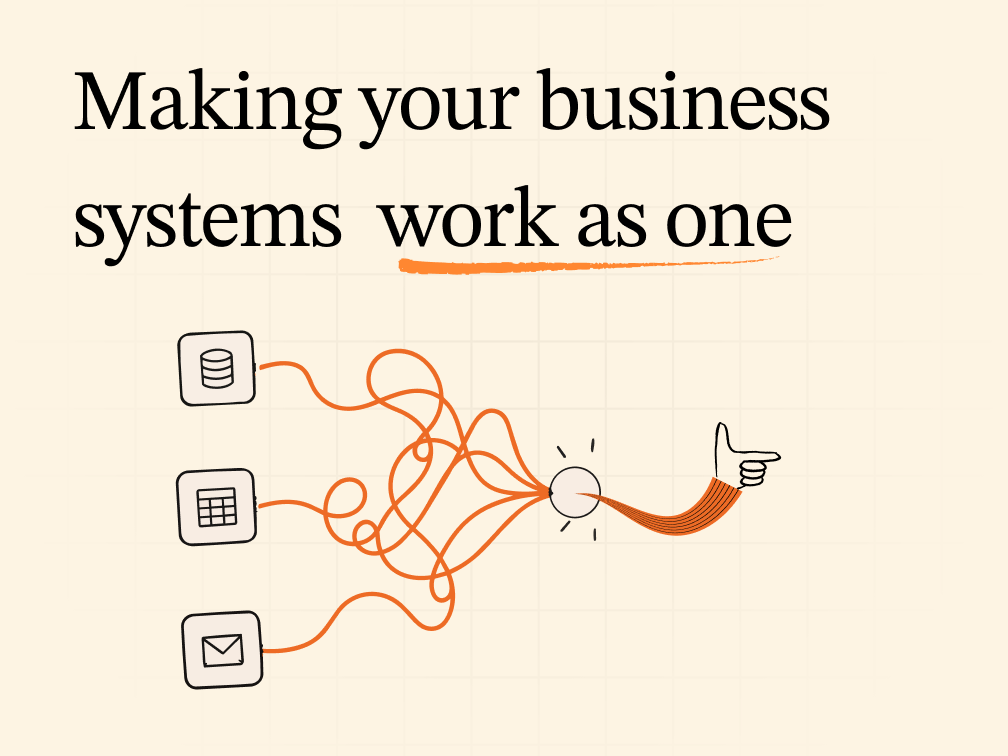
Every operational business runs on software. Some of it is purpose-built: a system for managing projects, a finance platform, something for field teams. Some of it is the kind that crept in and never left: Excel spreadsheets that became the default for purchase tracking, email threads that became the record of a customer conversation, shared drives holding documents that no other system quite knows what to do with. In construction, that might mean Procore sitting alongside Sage and a folder of spreadsheets. In manufacturing, Epicor or SYSPRO handling production while purchasing runs on a combination of email and Excel. In field service businesses, BigChange or simPRO running jobs while invoices land in an inbox and get processed by hand.
None of these are the problem. The problem is what happens between them.
The automation that stays inside the box
Most modern business software now includes some form of automation or AI. Procore has it. Sage has it. Microsoft Dynamics has it. These capabilities are real, and within their own platform they can be genuinely useful.
But they stop at the edge of their own system. They cannot reach across to the next tool, pull data from a spreadsheet, or push a confirmed output into a platform they were not built to talk to. The automations are contained. The business process, however, is not.
A business running Procore for project management, Sage for finance, simPRO for field operations, and a shared spreadsheet for purchase tracking does not have one connected process. It has several separate ones, with people manually bridging the gaps between each. Copying data from one system into another. Re-keying information that already exists somewhere else. Chasing confirmations across platforms that do not talk to each other.
That manual bridging is where the time goes.
The spreadsheet reality
Not every business in these industries runs on polished platforms across the board. Many run significant parts of their operation on Excel, shared drives, and email threads — not because they have not invested in technology, but because the available tools have never quite covered everything, and spreadsheets filled the gap.
A digital worker does not require a clean, fully integrated tech stack to operate. It works with what is already in place, whether that is a leading ERP, an industry-specific platform, or a spreadsheet that has been doing the same job for ten years.
What changes with a digital worker
A digital worker can move across the whole picture. It reads from one system, processes what it finds, and pushes the output into the next, regardless of what those systems are. Procore on one side, Sage on the other, a spreadsheet in between — the worker moves between them the way a person would, but without the manual effort.
Businesses do not have to replace what they have, retrain their teams on new platforms, or commission an integration project. The digital worker fits around the existing setup and handles the parts that currently fall to people by default: the copying, the checking, the re-keying, the chasing between systems that should not need a human to connect them.
The systems were never the issue. The gaps were. And those gaps are exactly what a digital worker is built for.
Latest insights and trends
Whether you're optimising today or building for tomorrow, we help you move faster with confidence.