
Why the smartest businesses are hiring workers that never log in
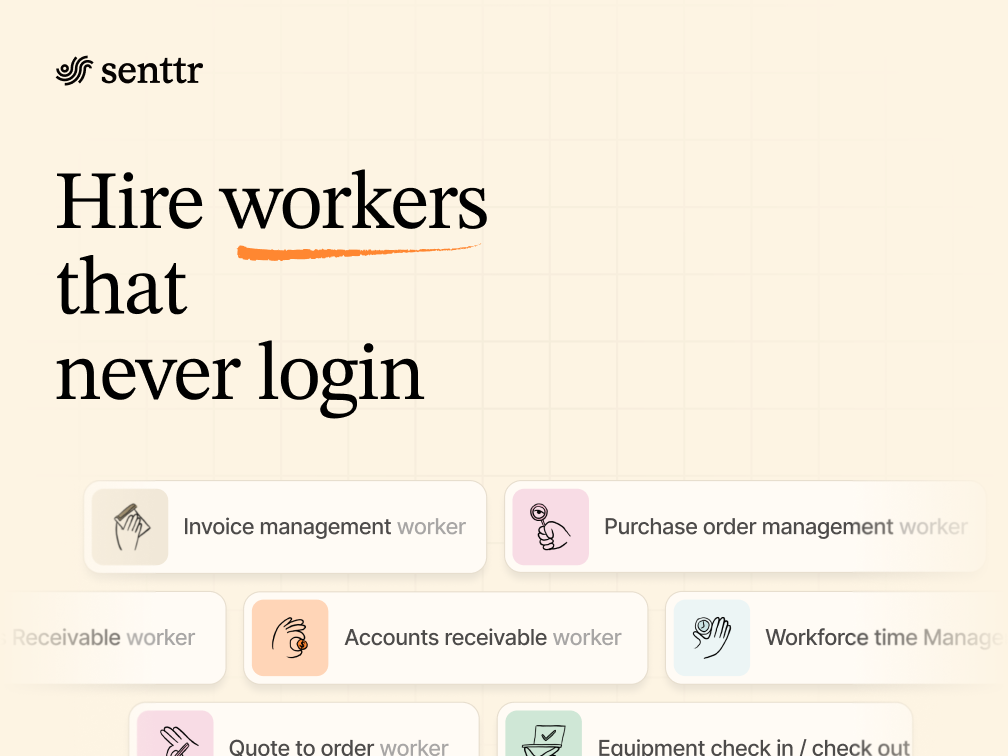
Something is changing in how the best-run businesses think about getting work done.
The teams that are pulling ahead are not necessarily the biggest or the best-resourced. They have found a way to give their people the time and space to focus on the work that actually matters.
This article explains what a digital worker is and why more and more businesses are starting to use them to give their teams their time back.
What is a digital worker?
You have inevitably come across AI in some form already, whether at home or at work. Most of what people encounter first is useful but limited: you ask it something, it responds, and you take it from there. You are still the one doing the job.
Some businesses have also experimented with automation software that has been around for years. These tools work well enough, as long as all the inputs arrive exactly as expected. The moment something comes in slightly differently, a document in an unusual format or a field in the wrong place, the whole thing grinds to a halt, and someone has to step in and sort it out manually. They also tend to handle one piece of a process rather than the whole thing, so the chasing, the exceptions, and the handoffs between steps still land on your team.
A digital worker is built for the way work actually arrives in a real business. An invoice that came in as a photo from a site office. A purchase order buried in an email thread. A form filled out differently by every customer who sends it. The worker reads what is actually there, works out what to do with it, and follows the job all the way through the process.
Take invoice processing. A digital worker receives the invoice, reads it, matches it to a purchase order, routes it for approval, chases the sign-off if it does not come, and flags anything that does not look right. Your finance team only needs to get involved when something genuinely needs their attention.
Or take order processing. A digital worker picks up a customer purchase order; however it arrives, reads the line items, checks them against your product data, and produces a ready-to-confirm order. Your sales team steps in when a decision is needed, not before.
The work gets done. Your team gets time back for the next customers and prospects.
Why this matters for your business right now
Most businesses in construction, manufacturing, distribution, and engineering are still running the same admin-heavy processes they were running five years ago. Invoices processed by hand. Orders re-keyed into systems. Payment chasers made by phone.
It is not because people are not working hard. It is because the options available before were not good enough to actually handle the job.
That has changed.
Digital workers can now take on complete workflows reliably, at a quality that means a person does not need to check every step. They handle the repetitive parts, deal with the routine exceptions, and leave your team free to do the work that needs a human.
And you decide how much the worker handles on its own. Some businesses want full automation from start to finish. Others want a person to step in and approve at certain points. The worker fits around how you want to run things, not the other way around.
The shift that is already happening
The businesses pulling ahead are not necessarily the biggest or the most tech-savvy. They are the ones asking a different question. Not "what technology should we be looking at?" but "what would I hand over if I could?"
That question leads us somewhere useful. Because most operational teams know exactly which jobs are eating their time. The answer is usually the same: the repetitive, process-driven work that must get done but does not need a person to do it.
Digital workers are built for exactly that work.
What to do with this
You do not need a technology strategy or an IT project to get started. Most digital workers are set up in minutes and require no coding or technical knowledge to run.
The question worth asking today is simple: which job in your business would you hand over first?
Latest insights and trends
Whether you're optimising today or building for tomorrow, we help you move faster with confidence.