
Removing the manual work isn't the same as removing the judgement
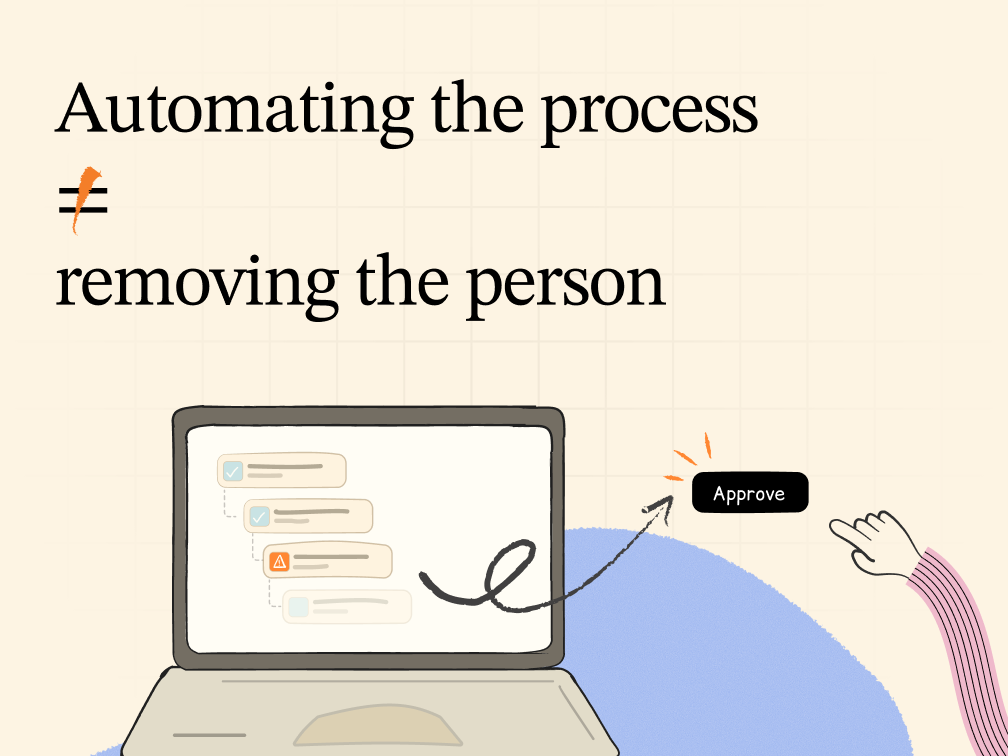
There's a persistent misunderstanding in how organisations think about improving operational processes: that automating processes means removing the people who own them.
It doesn't.
Take the quote generation process for example. The estimator who owns the quote doesn't own it because they copy data into a spreadsheet. They own it because they understand the risk, know the client, and make the call. The data entry is just the wrapper around the decision and the wrapper is the part that doesn't need them.
The same is true almost everywhere in business operations. A finance lead approving a purchase order brings experience, context, and accountability to that moment. They don't bring value to chasing the PO number across three systems to locate it in the first place.
The steps that need humans and the steps that don't
Most operational processes contain both types of step, mixed together — which is why the whole thing feels like it requires a person. But they're separable.
Steps that don't need a human are consistent every time: extract this, check it against that, log it here, notify them there. They follow rules. They don't require interpretation. Done manually, they're reliable enough — but they consume time, introduce errors at the margins, and crowd out the work that actually requires thought.
Steps that do need a human involve judgement: is this variance acceptable given what I know about this supplier? Should we proceed on this quote given the client's payment history? Is this safety deviation minor enough to resolve internally or does it need escalating? These moments can't be reduced to a rule. They need someone who knows the context.
The mistake organisations make is treating the whole process as indivisible — as if you either keep it manual end-to-end, or hand the whole thing over. Neither is right.
What good process design actually looks like
Strip out the steps that never needed a human. Surface clearly the moments that do.
An estimator reviewing a quote should be looking at a prepared summary, not assembling one. The work of gathering, checking, and structuring the inputs is mechanical. The work of deciding whether to proceed — at what margin, with what caveats — is where their expertise lives.
A finance lead approving a run should be making a decision, not locating the information needed to make it. The right information should arrive prepared, not scattered across inboxes and spreadsheets waiting to be chased.
This isn't about replacing the person. It's about making sure their time is spent at the point where their judgement actually matters — and that the mechanical steps which precede it don't consume the same hours.
Why this matters operationally
When the manual and judgement-based steps are properly separated, a few things happen that compound over time.
Decisions get faster, because the information needed to make them arrives prepared rather than scattered. Errors reduce, because the steps most prone to human error — copying, re-keying, chasing confirmations — are handled consistently. And the people who own the process actually own it more fully, because they're engaging with it at the level that requires them, not at the level of data entry.
The estimator still owns the quote. The finance lead still approves the run. The safety manager still signs off on the escalation. They just stop spending their time on the parts of the process that never needed them in the first place.
That's not removing the human. That's putting them where they belong.
Latest insights and trends
Whether you're optimising today or building for tomorrow, we help you move faster with confidence.